Henrin ja Iivarin näyttely Jos tällainen kohtaus esitetään jo ennen alkutekstejä, se kasvaa merkitykseltään Hippolyte Korjaamolla käsittelee kollektiivista muistamista yhden suomalaisten nykyhistoriaa muovaavan tapahtuman ja sen yhä havaittavien vaikutusten kautta. Vaikka sotiemme veteraaneja on elossa enää alle 2000, heidän muistaminen on yhä merkittävä osa suomalaisten perinteitä. Näyttely sisältää uusia valokuvia, arkistokuvia, julkaisun ja tilan jakavan sekatekniikkatyön.
Henri’s and Iivari’s exhibition If Such a Scene is Presented Even Prior the Opening Titles, it Grows in Significance at Hippolyte Korjaamo deals with collective memory through one event which shaped Finnish modern history and it’s after effects which are still observable today. Even though there are less than 2000 veterans alive from WW2, remembering them is still a significant part of finnish tradition. The exhibition contains new photographs, archival footage, publication and a mixed media work which splits the space in two.
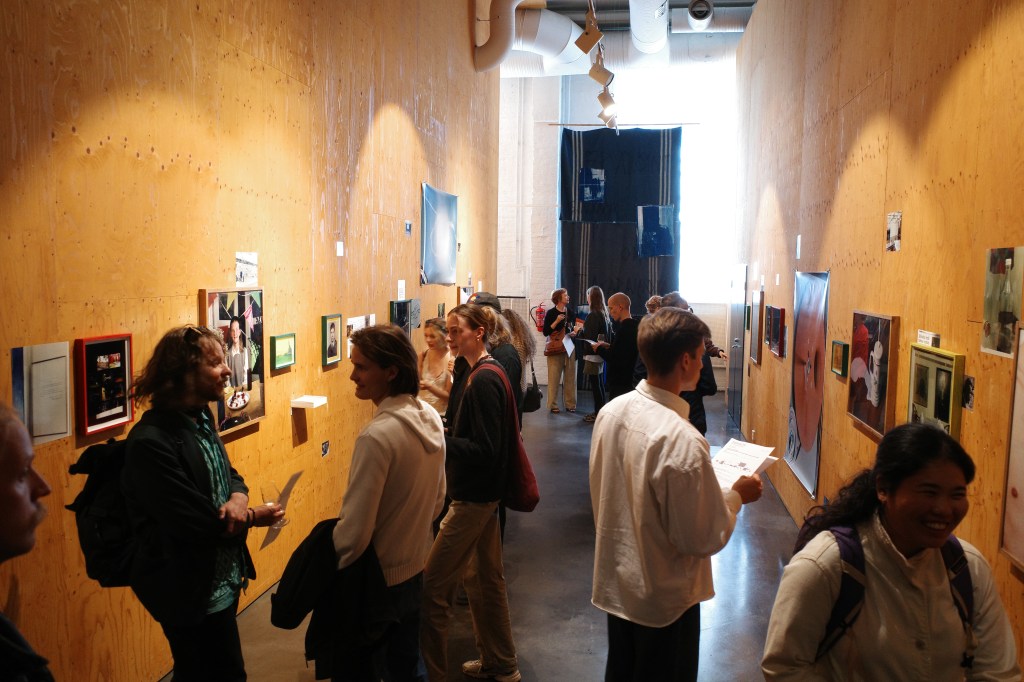
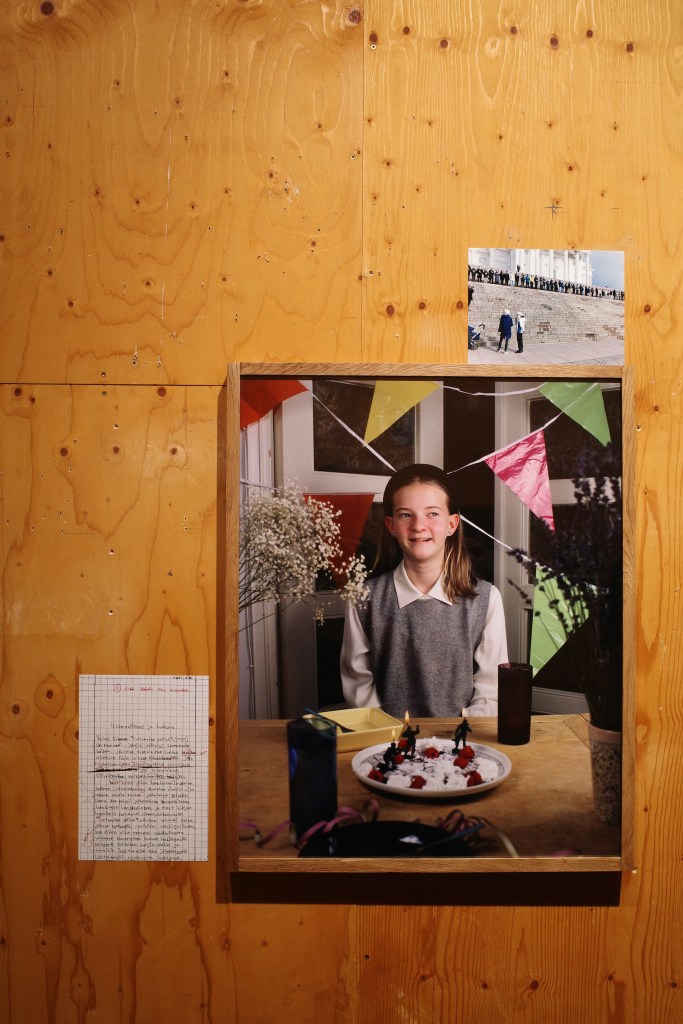
Näyttely alkaa isolla värikuvalla, joka on otettu Kauhajoen veteraanimuseossa. Tämä yhdessä itsenäisyyspäivän valokuvan kanssa asettavat näyttämön tulevalle. Vasemman seinän voi katsoa sisältävän eräänlaisen kasvutarinan. Heti alussa on kolmen teoksen kollaasi. Henrin yläasteella kirjoittama essee “Isänmaallisuus ja kuolema” Väinö Linnan Tuntemattomasta sotilaasta, “Palvelus II”, jossa nähdään nuori tyttö juhlissa, kakun sisältäen sotilaiden näköisiä kynttiöitä, sekä sen yläpuolella kuva talvisodan alkamisen muistopäivästä. Tämän kuvan etualalla leikkaantuvat reunasta lastenvaunut. Näissä teoksissa tulee esille kuinka jo nuoresta alkaen Talvisodan muisto on olennainen osa kasvatusta. Omana kouluaikanani, kaksi vuotta nuorempana, suurimman osan luettavista kirjoista sai päättää itse, jolloin oletan taiteilijan myös itse valinneen Linnan teoksen esseensä aiheeksi. Ison vedoksen liput, kukat ja kakut antavat asialle hyvin iloisen vivahteen. Kasvatuksen olevan enemmänkin kannustavaa kuin pelottelevaa.
The exhibition begins with a large colour photograph taken at the Kauhajoki museum of veterans. This combined with another photo taken during the independence day sets the stage for what is to come. The left wall can be seen as a coming of age story. It begins with a collage of three works. Essay written by Henri at upper elementary school “Patriotism and death” about Tuntematon sotilas by Väinö Linna, “Service II” which displays a young girl at a party and a cake containing soldier shaped candles, above that a photo of the memorial day of start of Winter war. In the foreground of that one there is a strolley clipped from the edge. These works give a hint how the memory of Winter war is a part of the upbringing. When I was in school only 2 years younger than Henri, most of the books you read were of your choice so I assume the artist also chose the book of Linna for the topic of his essay himself. The flags, flowers and cake of the big print give a positive feeling. Like the upbringing is through positive reinforcement rather than fearmongering.
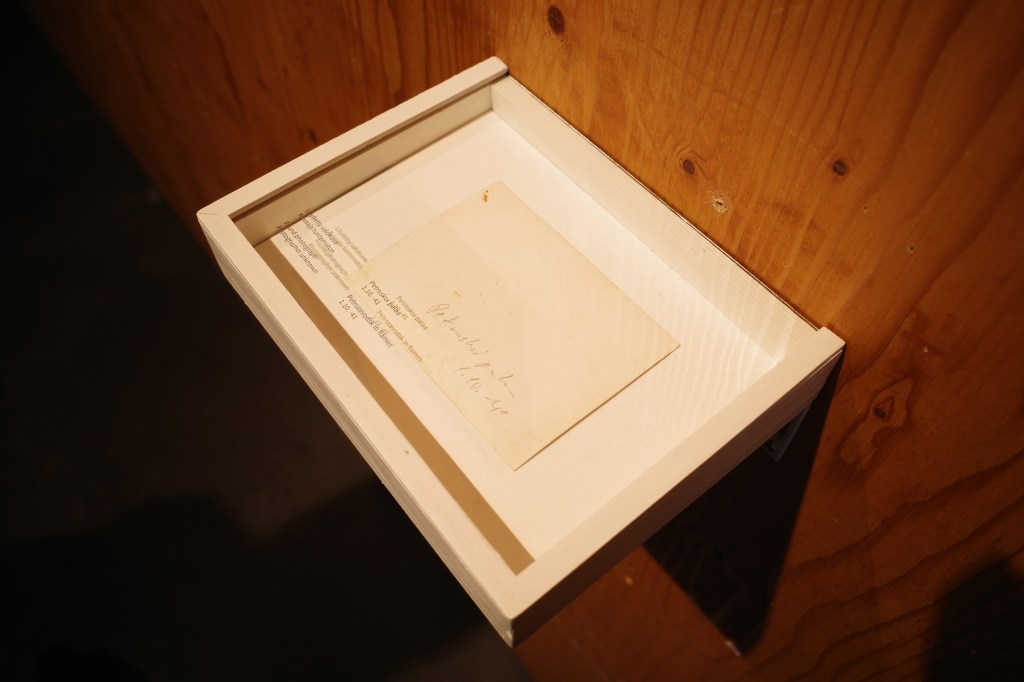
Näiden kuvien jälkeen siirrytään pois omakohtaisesta kokemisesta. Tuntemattoman sotilaan ottama kuva “Petroskoi” (1941) on käännetty ylösalaisin, paljastaen vain taakseen kirjoitetun tekstin. Jo kollektiivisessa tajunnassamme voimme yhdistää tämän jatkosodassa vallattuun kaupunkiin Karjalan kannaksessa välittämättä itse piilotetun kuvan sisällöstä. Pelkkä nimi ja aika kertovat enemmän tapahtumista kuin mitä pelkkä kuva useimmille ikäpolveni edustajille, jotka eivät miljöön perusteella osaisi sijoittaa sitä kartalle tai sitoa aikaan kuin mahdollisten sotilaiden läsnäolosta. Tämän yläpuolella nähdään taiteilijan isoisoisän ottama kuva samaisesta kaupungista.
After these we move away from personal experiencing. A photo taken by an unknown soldier titled “Petroskoi” (1941) is turned upside down, only revealing the text written on the backside. In our Finnish collective mind we can already connect this with a city captured in Karjala during continuation war, ignoring the content of the hidden image. Just the name and time tell more about the events than the image could for most of my generation who couldn’t place it on the map based on cityscape nor tie it to a time apart from a possible presence of soldiers. Above there is a photo of the same city taken by the great-grandfather of the artist.
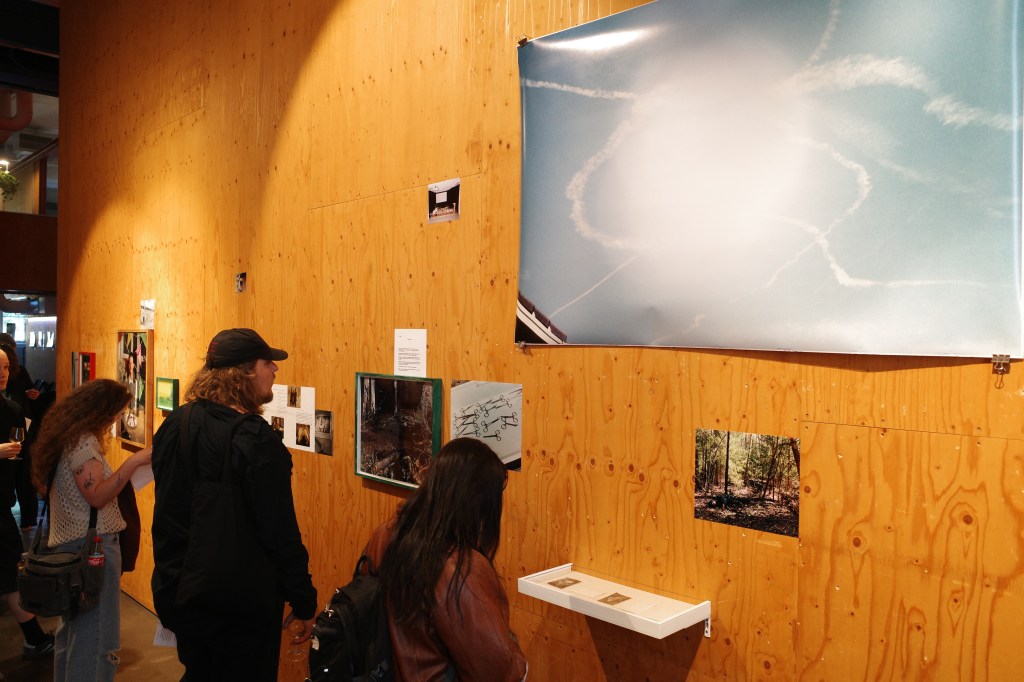
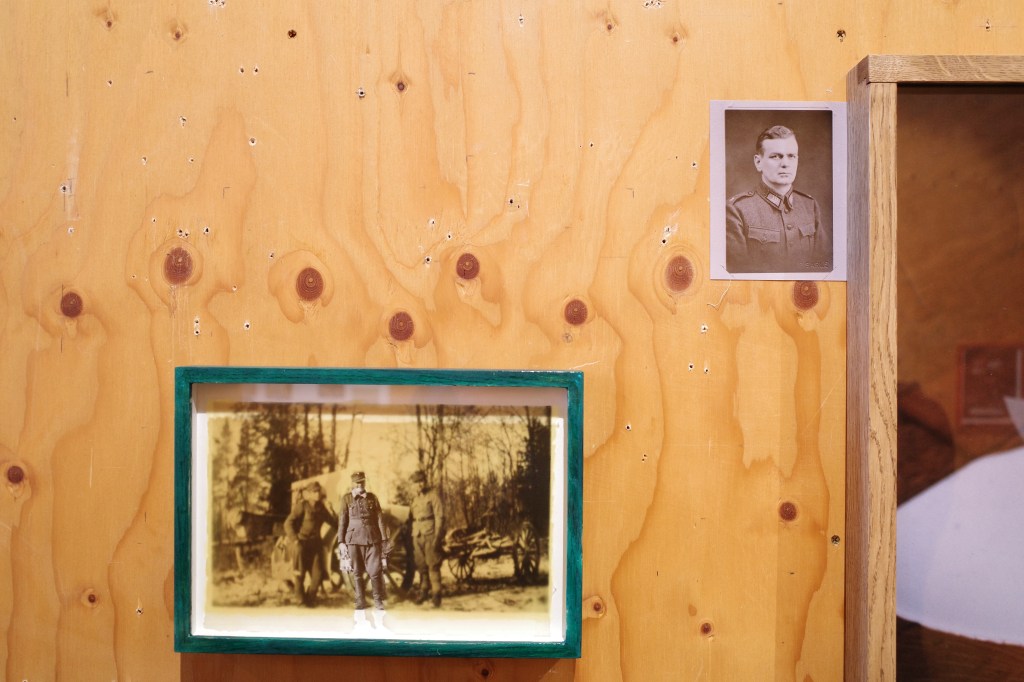
Ajallinen jatkumo siirtyy eteenpäin taiteilijan isän sotilasmuotokuvasta. Tämä alkaa sitomaan sotahistorian merkityksen taiteilijan omakohtaiseen kokemukseen. Siitä tuli ylisukupolvinen jatkumo. Ennen kuin päästään omaan kokemiseen, välissä tuodaan esille sodan jälkeisten traumojen käsittelyä viihteen ja tallentamisen kautta. Vuokrasopimus ruumiinosista sotaelokuvan kuvausta varten ja tämän alapuolella nähtävä kuva kaatuneista mannekiineista tuovat esille kulissien taa piilotetuista viihdeteollisuuden puolista. Vuodesta toiseen lukemattomat perheet istuvat itsenäisyyspäivänä sohvalle katsomaan Tuntemattoman sotilaan ja sen lukuiset uudelleenfilmatisoinnit ovat aina myyntimenestys elokuvateattereissa. Ne toistavat toistamistaan sankarimyytin luontitarinaa. Seinän isoin vedos näyttää lentonäytöksen savuvanat kuvattuna eräältä takapihalta. Molemmat ovat kansalle suunnattua viihdettä, joista yksi kertoo asiasta kärsimyksen kautta ja toinen valaa uskoa kansakunnan mahtiin
The timeline moves forward with a military portrait of the artist’s father. This now starts to tie the significance of military history to the artist’s own experience. It created a continuity which now spans many generations. Before we get to the actual own experience of the artist, we can see the processing of post-war trauma through entertainment and recording. A rental agreement of body parts for filming a war movie and the photo of fallen mannequins bring to light parts of entertainment industry usually hidden in the backstage. Year after year countless families sit down on independence day to see The Unknown Soldier and the countless remakes are always a blockbuster. They keep on repeating the creation story of the hero myth. The biggest print on the wall shows trails from an air show as seen from a backyard. Both of these events are entertainment for the masses, one telling the story through suffering, while other one creating faith in the might of the nation.
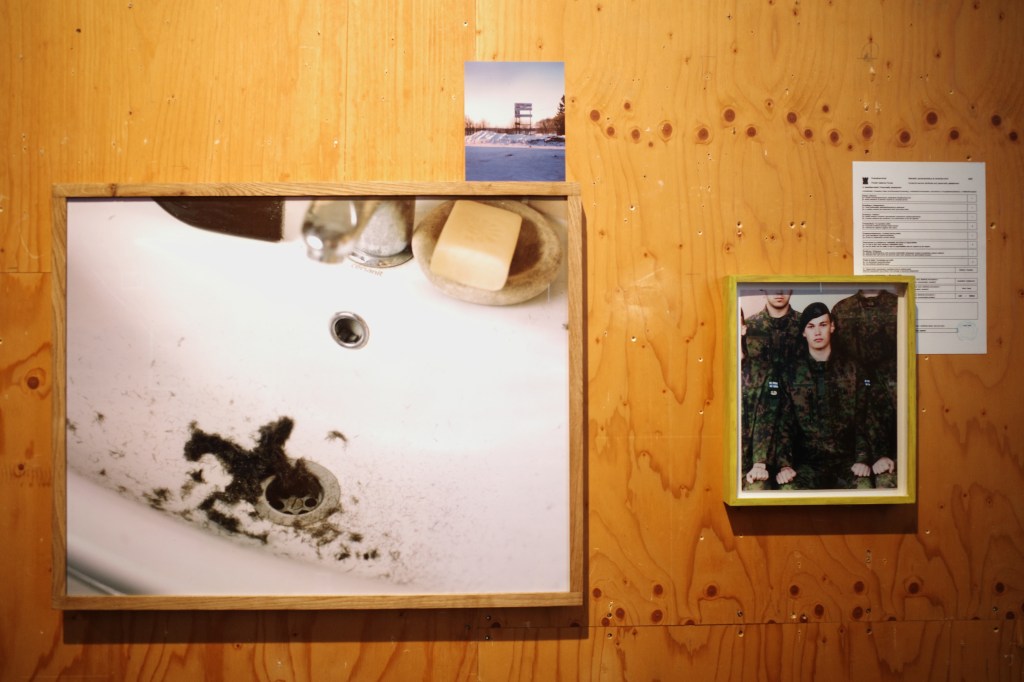
Seuraava temaattinen osuus käsittelee inttiä. Suomessa tämä on sukupolvia yhdistävä miehistymisen rituaali. Tämä siirtymäriitti on kuvattu muutamin eri tavoin. Palvelusajan kuvat kertovat muutoksesta, iso kuva ajelluista hiuksista on aloituspiste, talvinen kuva syrjäkylältä talvileiristä, kuvat uniformussa välivaiheista ja lopuksi nähtävä palvelusajan arviointilomake tuo päätöspisteen. Suomalaiselle miehelle nämä ovat helposti lähestyttäviä viitteitä, sillä vaikka et olisi käynyt inttiä, saat aivan varmasti kuulla tarinoita ympäröiviltä ihmisltä töissä, saunailloissa, baarissa ja lukemattomissa muissa yhteyksissä. Tämä tarinankerronnan perinne on tärkeä osa sotaan sidotun kulttuurihistoriamme jatkumoa. Näiden kuvien välillä on myös nähtävissä leikittelevä kontrasti. Hiukset lavuaarissa ovat pelkkä räpsy, siinä missä arviointilomake on luonteeltaan äärimmäisen virallinen. Samoin itse otettu kuva talvella ja sen vastapaino virallisille palvelukuville. Kolikon kaksi puolta, virallinen totuus palveluajalta sekä omakohtainen kokemus, jossa on jätetty tilaa tunteellisemmalle kerronnalle.
The next thematical part deals with military service. In Finland, this is a ritual of manhood connecting generations. This rite of passage is shown in a few ways. The photos taken during service tell a story of transformation, the large photo of shaven hair signals a starting point, a winter photo from a remote place hints winter camp, photo in an uniform is an intermediary stage and the end assessment form creates an ending point. For a Finnish man these are easily approachable references even if you didn’t serve, because you will here the service stories of people around you in work, sauna, bars and countless other occasions. This tradition of storytelling is an important part of the continuation of our cultural history tied to war. Between these pictures there is also a playful contrast. Hair in a sink is just a snapshot, whereas the form is extremely official. Also the photo taken during winter is casual where as the photo in the uniform is once again official. Two side of the coin, official truth from the time of service and personal experience which leaves room for more emotional storytelling.
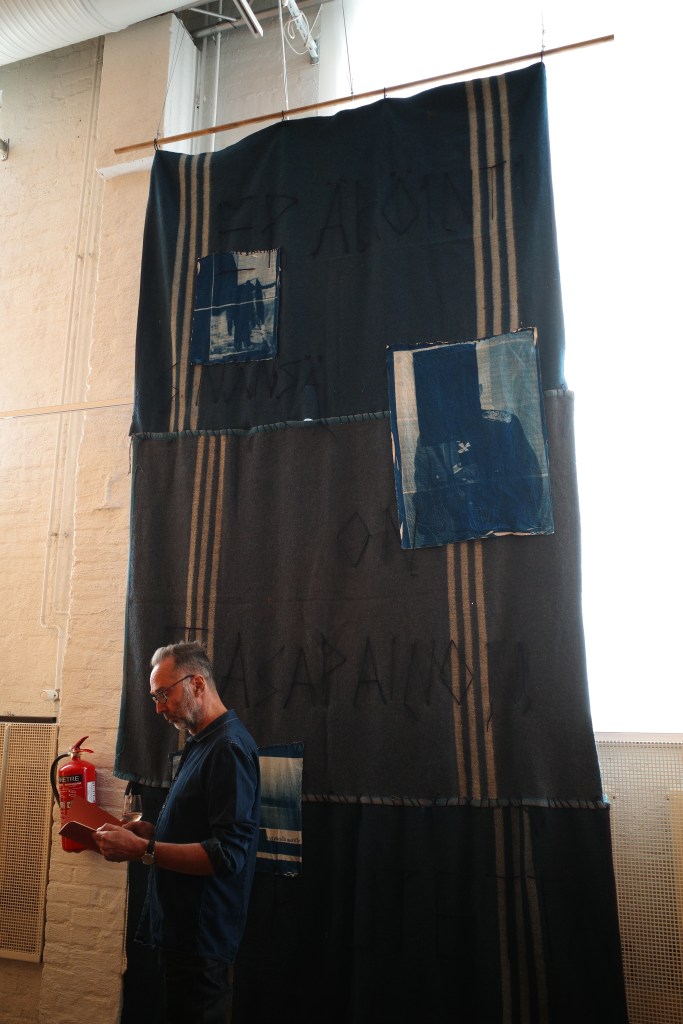
Tilan halkaisee suuri tekstiilityö, joka on tehty syanotypioista, armeijan vanhoista vilteistä sekä kirjonnasta. Väri ja kuosi kertovat materiaalin lähteen, syanotypiat taas sisältävät viitteitä sankarimyytin luontiin, joka on nähtävissä kirjallisessa muodossa näyttelyn yhteydessä olevasta julkaisusta sekä myöhemmin nähtävissä teoksissa. Itse työ kärsii hieman luettavuuden puutteesta kirjailussa, joka siirtää julkaisussa mainittavalta one linerilta painoa etenkin keskimmäiselle syanotyypille, joka tarjoaa suurimman kontrastin taustaansa. Erityisesti sensuroidut kasvot kiinnittävät huomion, sillä koemme meidän osamme sotahistoriasta olevan avoimempaa kuin useimpien muiden maiden.
The space is split by a large textile work consisting of cyanotypes, old military blankets and embroidery. The colour and pattern tell the origin of the material, the cyanotypes contain hints about the creation of the hero myth, which is available in written form in the publication available at the exhibition, and also works which can be seen later. The work itself suffers a bit from the lack of legibility, which shifts weight from the one liner mentioned in the publication to especially the middle cyanotype which offers most contrast with it’s background. Most of all the censored face draws attention because we Finns feel like our part of WW2 history is more open than most other countries.
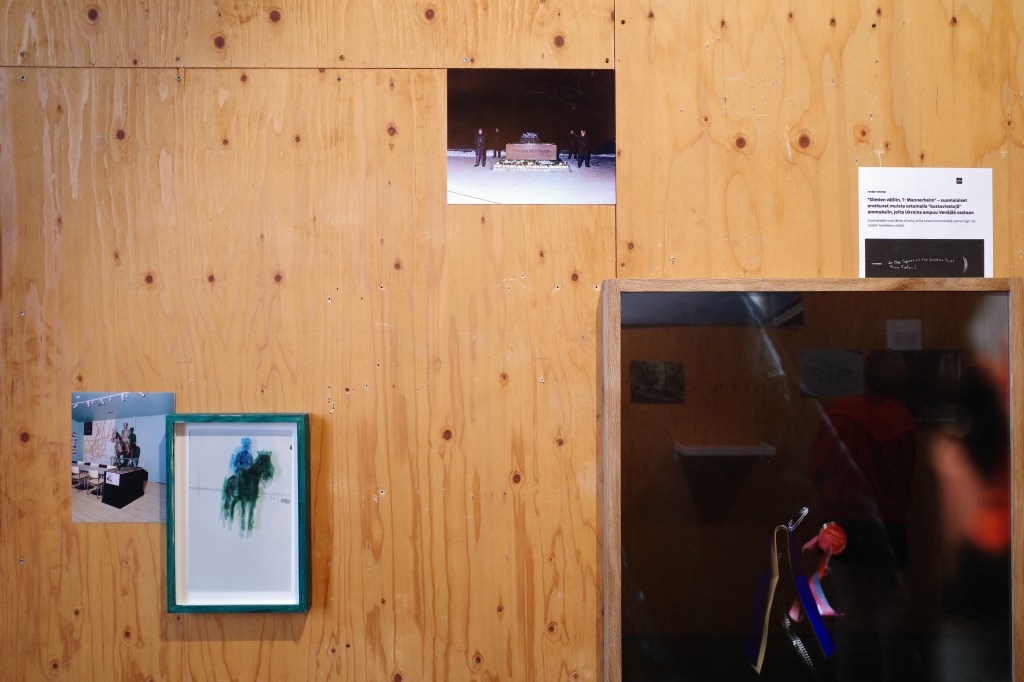
Oikea seinä käsittelee enemmän sodan jälkeen luotua sankarimyyttiä. Kuvat patsaista, niiden luonnoksista, haudoista ja lehtileike Ylen verkkojulkaisusta näyttävät kuinka tämä sotahistoria on pyritty yksilöittämään yhteen sankariin, Mannerheimiin. Itse lehtileikkeen otsikon ja ingressin sisältö kuitenkin pyrkii romuttamaan tätä vitivalkoisen, puhtaan sankarin, nimeä, sillä se on nyt yhdistetty vihaan ja kostonjanoon. Se yhdessä alemman vedoksen kanssa tuovat pienen sivupolun kuvassa näkyvän Ukrainan väreissä olevan pinssin kanssa. Ukraina koetaan Venäjän yllätyshyökkäyksen jälkeen kansakuntamme veriveljenä, saman vihollisen uhrina.
The right wall deals a bit more about the hero myth created after the war. Pictures of statues, the sketch of which, graves and an article of Yle web publication display how this war history is attempted to be distilled to one individual hero, Mannerheim. The title and standfirst of the article attempt to demolish this name of snow white, pure hero by tying it to hate and vengeance. That in combination with large print beneath it bring a small side trail through the pin in Ukrainian colours seen in the picture. After the surprise attack of Russia, Ukraine is now seen as a blood brother of the Finnish nation, a victim of a common enemy.
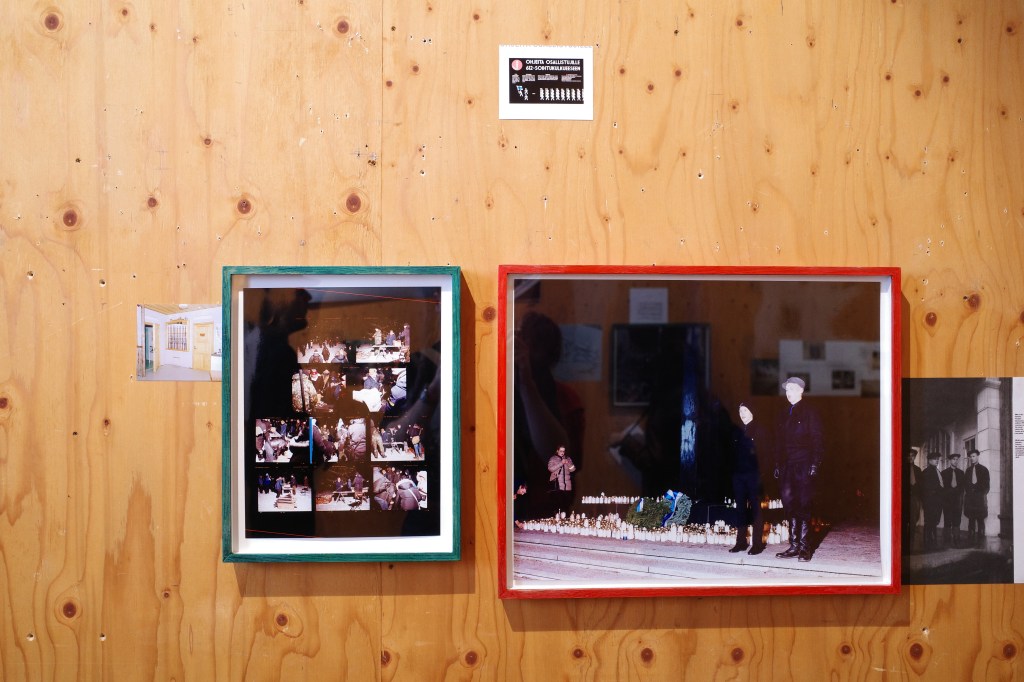
Itsenäisyyspäivän kulkueet ovat pitkään jatkunut perinne Helsingissä. Niistä perinteisin ja puolueettomin on Ylioppilaiden soihtukulkue. Kuitenkin viime vuosina on nähty useiden eri liikkeiden kulkueita ja niiden vastakulkueita. Näistä ehkä näkyvin on 612-soihtukulkue. Teoskokonaisuudessa on kaksi vedosta itse kulkueista. Ne on ympäröity kuvalla Taistelijan talon museosta, ohjeella kulkueeseen osallistumiseen sekä vanhalla uutisleikkeellä Isänmaallisesta kansanliikkeestä, joka oli voimissaan Suomessa vähän ennen sotia ja vielä sodan aikana. Museokuvalla ja lehtileikkeellä luodaan selvä jatkumo suojeluskuntien, sotaa edeltäneen fasistisen IKL-liikkeen ja nyt nykyajan liikkeiden välille, kuin mikään ei olisi muuttunut liki vuosisadassa. Erityisesti puvustuksella ja poseerauksella kaksi teosta ovat kuin peili. Molempia aikakausia yhdistää näiden nuorten miesten halu toimia omaksi koetun ihmisryhmän, heidän näkemyksensä kansakunnasta, eduksi.
Independence day processions are a long lasting tradition in Helsinki. The most neutral and traditional of them being the torchlight procession of the graduates. However in the recent years we’ve seen processions from different organizers and opposing protests. Maybe the most known of them being the 612-torchlight procession (Authors note: The independence day is celebrated on 6th of December). In this collage of prints there are to prints of the 612 processions, surrounded by a printed guide for participating in one, a photo taken in the museum of the combatant’s house, and an old news article about the patriotic people’s movement (IKL) which was around shortly before and during the war. The photo in the museum and the news article create a link between the Finnish white guard, a fascist party (IKL) from before the war and the movements happening today, as if nothing had changed during a century. Especially with the costumes and posture these two works are like a mirror. Both eras being tied together by the will of these young men to work for the benefit of their group of people, their vision of the Finnish nation.
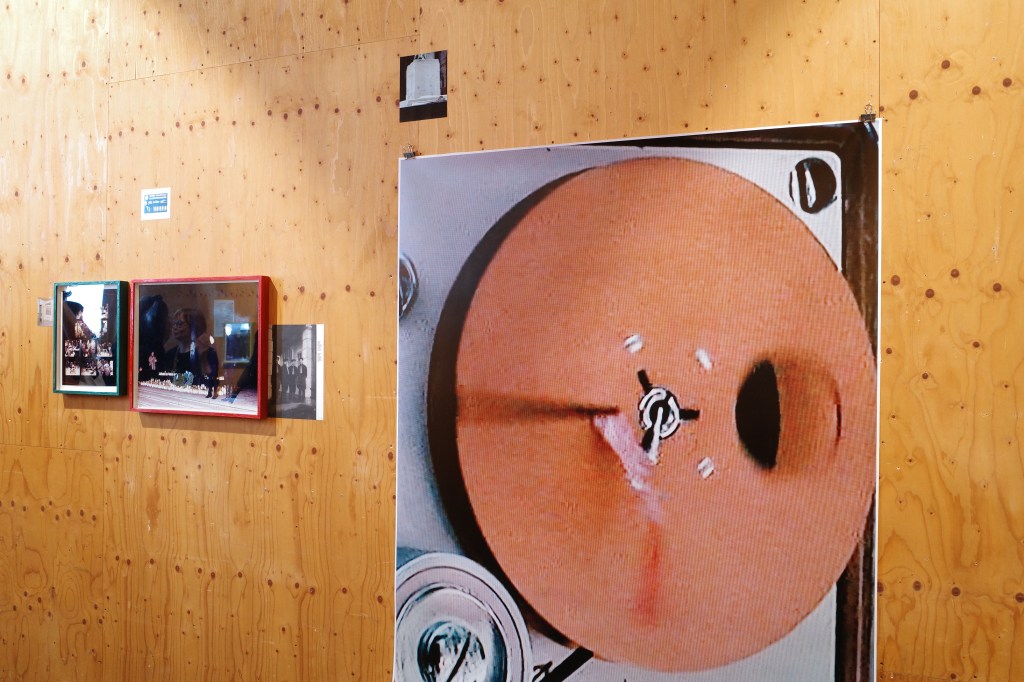
Seinän halkaisee valtava suurennos kelanauhurin kuvasta, joka tuo niinikään irtioton visuaalisen muistamiseen kuvan ja tekstin muodossa. Se kuitenkin jää tähän. Teoksen nimi Untitled (Tali-Ihantala 1944) jälleen luo merkityksensä kollektiivisen muistin kautta. Vaikka sukupolveni, tai sitäkään edeltävä, tai edes sitäkään edeltävä ei tätä hetkeä kansamme historiassa kokenut, pelkkä paikan nimi ja aika jälleen kerran yhdistyy mielessämme olevaan sankarimyyttiin pienestä maasta, joka ei nöyrtynyt suurimmankaan uhan edessä.
The wall is split by a massive blow-up of a tape recorder which detaches from the visual recollection in the form of image and text. However it leaves it at that. The title of the work Untitled (Tali-Ihantala 1944) once again creates meaning through collective memory. Even though my generation, or the one before it, or even the one before that didn’t experience that decisive moment in the history of Finnish people, just the name of a place and a date once again combines in our minds into this hero myth of a small nation which did not give in even when facing the biggest threat.
Tätä nauhoitetta seuraavat kuvat lähinnä käsittelevät lisää perintöä. Arkistokuvia, kuvia veteraaneihin ja sodan muistoon liittyvistä juhlallisuuksista sekä muutama niin ikään vapaammin tulkittava kuva. Näistä ehkä merkittävinpänä nään tulenaran suhteemme alkoholin kanssa. Vaikka minttuinen ryyppy kuulostaa raikkaalta, sodan traumat jättivät monelle perinnöksi alkoholismin. Kirkkaiden tuhovimma yhdistyy yhdessä vedoksessa pulloon, jonka kylkeen on kiinnitetty tulitikku. Molotovin koktail on kansakuntamme suurimpia sotamyytin vientituotteita ulkomaille yhdessä Simo Häyhän, valkoisen kuoleman, kanssa. Toisessa teoksessa näkyvä pöydälle ylitseläikkynyt maito luo mielessäni tämän yhteyden. Veri olisi groteskia, mutta mainonnan perusteella voikin kuvitella kansakuntamme suonissa virtaavan maidon.
The images following it mostly deal with more legacy. Archival pictures, pictures related to veterans and the festivities around the memory of war and a few pieces with more open interpretation. For me maybe the most significant aspect is our flammable relationship with alcohol. Even if a minty shot sounds fresh, the war trauma left alcoholism as an inheritance for many. In one work the destructive nature of distilled liquids is combined with a bottle which has a match taped to it’s side. The Molotov cocktail is one of our biggest war myth exports along with Simo Häyhä, The White Death. I see this connection in another work with the overflowing milk. Blood would be grotesque, but based on advertisements, you could imagine milk flowing in the veins of our nation instead.
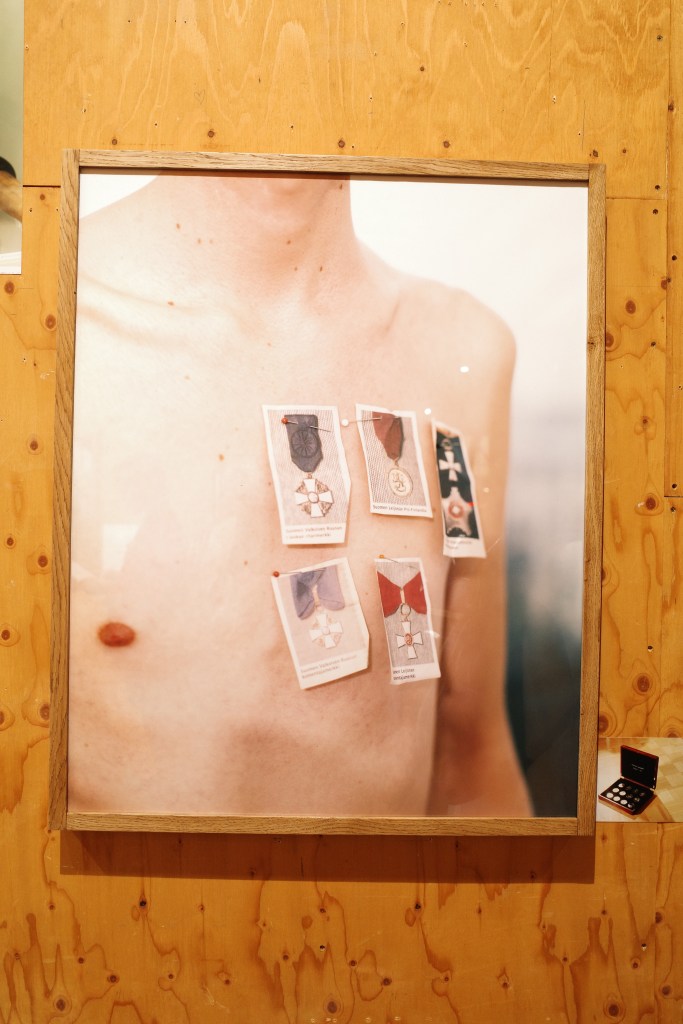
Näyttelyn päättää kahden kuvan pari. Nuoren miehen rintaan neuloilla kiinnitetyt tulosteet sodan saavutusten perusteella myönnetyistä arvomerkeistä ja kuva laatikosta, joka sisältää aitoja arvomerkkejä. Ne jättävät rintaan pienen toiveen siitä, että kansakunta olisi valmis siirtymään eteenpäin eikä yksikään nuori mies joutuisi enää tilanteen eteen, jossa kyseisiä merkkejä voi ansaita.
The exhibition ends with a pair of images. Prints of wartime medals attached to a chest of a young man with needles and a box filled with real medals. They leave you with a glimmer of hope that nation would be ready to move forward and that no young man would face the circumstances where such medals are earned.
Näyttely kokonaisuutena tarjoaa hyvin paljon paljon pohdittavaa, kun palaa takaisin alkuruutuun. Näyttelyn saatetekstissä lukee seuraavasti:
Kollektiivisella muistilla viitataan yhteisöjen sisäiseen historiakuvaan, sukupolvien avainkokemuksiin sekä historiallisiin traumoihin, joiden kautta yhteisö muovaa omaa identiteettiään. Suomalaisen kollektiivisen muistin peruskivi muodostuu monin tavoin talvi- ja jatkosotaan liittyvistä kertomuksista, myyteistä ja traumoista. Kollektiivista muistia ylläpidetään niin yksityisesti kodeissa, kuin yhteiskunnallisesti muistotilaisuuksien ja kulttuurillisesti esimerkiksi elokuvien tasolla. Sota on sen kokemattomalle kaukainen ja vieras, ja siksi sen muistamisessa erityisesti kuvallinen kulttuuri nousee keskeiseen rooliin.
Oma lähestymiseni näyttelyyn tuntuikin olevan kuin ristisanakirjasta. Minulle tarjottiin visuaalisia vihjeitä, joita parhaani mukaan yhdistelin omaan käsitykseeni historiastamme. Täytin aukkoja omilla oletuksillani suomalaisuudesta ja loin täten näyttelyn narratiivin oman kriittisen näkökantani ympärille. Esillä oleva kuva ja teksti loivat paloihin hajoitetun tiiviiin narratiivin viimeisen sadan vuoden historiastamme, sitä eniten muovanneesta yksittäisestä ajanjaksosta ja tähän päivään saakka jatkuneesta aiheen käsittelystä. Tämä näyttely näyttäytyykin aivan erilaisena riippuen katsojan pohjatiedoista ja näkökannoista. Ulkomaalaiselle vierailijalle kokemus on aivan erilainen, sillä hän ei ehkä ole saattanut olla osa kollektiivista muistiamme ennen kuin astui näyttelytilaan. Uskonkin, että tässä näyttelyssä toteutuu erityisen vahvasti Duchampin näkemys katsojan roolista taiteen luontiprosessissa kokemuksien ja tulkinnan kautta. Katsoja saattaa teoksen valmiiksi.
The exhibition as a whole leaves you with quite a bit of pondering after you return to where it starts. The exhibition statement says:
Collective memory refers to the internal historical perspective within communities, the key experiences of generations, and historical traumas through which a community shapes its identity. The cornerstone of Finnish collective memory is largely formed by the stories, myths, and traumas related to the Winter War and the Continuation War. Collective memory is maintained both privately in homes and socially through commemorative events, as well as culturally through mediums such as film. For those who have not lived through it, war is distant and unfamiliar, thus the role of visual culture becomes crucial in its remembrance.
My own approach to the exhibition felt like one from a crossword puzzle. I was given visual clues which I combined with my knowledge of the Finnish history to the best of my abilities. I filled the gaps with my assumptions of finnishness and created the narrative of the exhibition based around my critical viewpoint. The displayed image and text offered a condense narrative of last 100 years of Finnish history shattered into fragments, the single period which defined it the most and it’s aftermath until today. This exhibition will present itself quite differently based on the knowledge and perspective of the viewer. For a foreigner the experience might be completely different, for they might have not been a part of the Finnish collective memory before stepping into the exhibition space. I believe that this exhibition really follows Duchamp’s vision of the viewers role in creating a work of art through deciphering and interpreting it, adding to the creative act. This is a piece completed by the viewer
14.6.-10.8.2024 Hippolyte Korjaamo
 Panu Kannisto
Leave a comment